

Why TPEE Is Used in High-End Cables | TPEE Material Guide
17 April 2026
TPEE Material for Industrial Seals: Why Manufacturers Choose Hetroflex TPEE
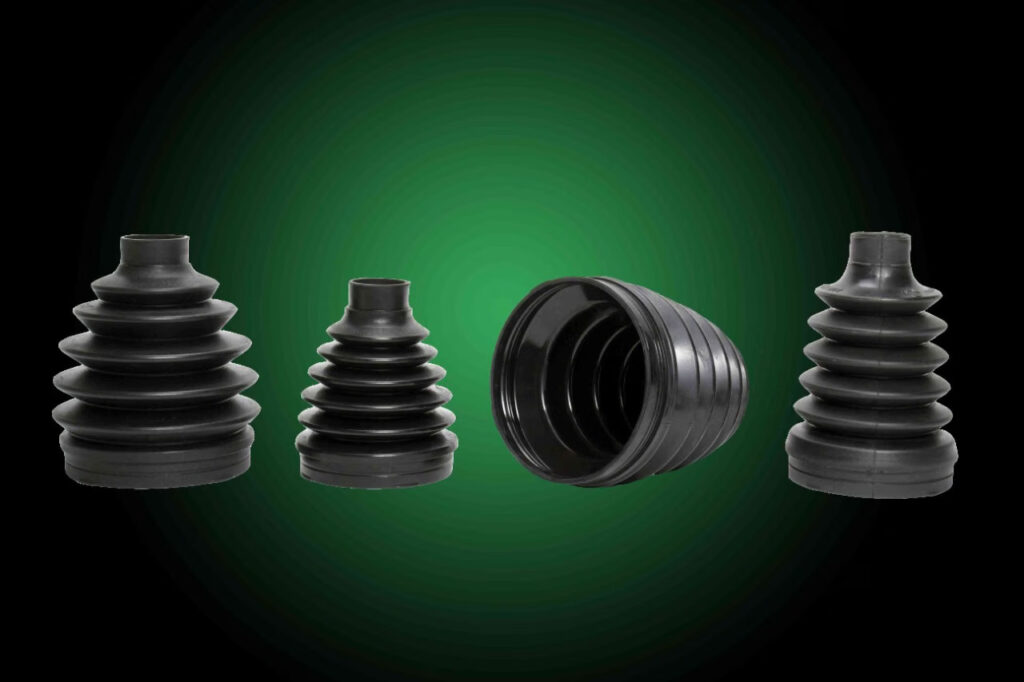
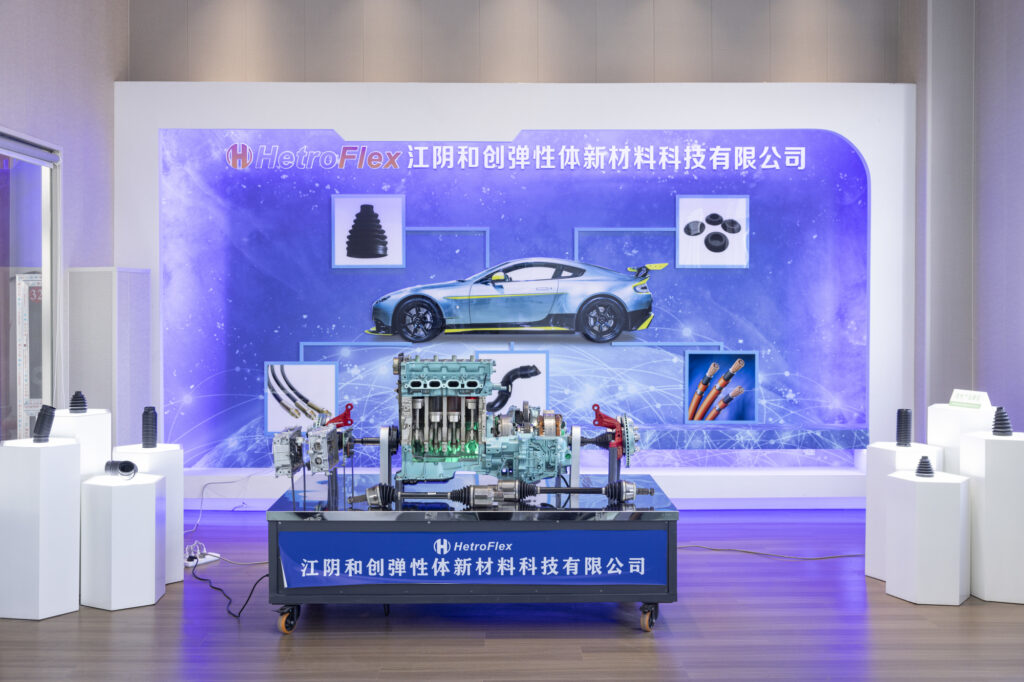
10 May 2026As automotive engineering evolves toward higher efficiency and durability, the demand for advanced polymer solutions in drivetrain components has never been greater. One critical component that often defines the service life of a vehicle’s half-axle assembly is the Constant Velocity Joint (CVJ) boot. Among the various materials available, TPEE material has emerged as the gold standard for high-performance CVJ boots. This article explores why thermoplastic polyester elastomer outperforms traditional rubbers and polyurethanes, and how TPEE properties directly translate into extended product reliability.
Why Traditional CVJ Boot Materials Fall Short
Historically, CVJ boots were manufactured using chloroprene rubber (CR) or polyurethane (PU). While cost-effective, these materials have inherent limitations. Rubber boots are susceptible to ozone cracking and fatigue under high-temperature cycling. PU, although tough, can hydrolyze in moist environments. Modern vehicles—especially EVs and high-torque SUVs—require a material that withstands extreme articulation, high heat, and chemical exposure without failure.
This performance gap is precisely where TPEE material delivers unmatched value.
Understanding TPEE: Thermoplastic Polyester Elastomer
TPEE (Thermoplastic Polyester Elastomer) is a block copolymer combining the flexibility of rubber with the processability and strength of engineering thermoplastics. Its molecular structure alternates between hard polyester segments (providing heat and chemical resistance) and soft polyether segments (offering elasticity and low-temperature flexibility). This unique architecture gives TPEE properties that are ideal for dynamic sealing applications.
Key TPEE Properties for CVJ Boots
- Wide Temperature Range: Operates from -40°C to +150°C without significant modulus change.
- Excellent Fatigue Resistance: Withstands millions of flex cycles at high articulation angles.
- Superior Chemical Resistance: Resists oils, greases, fuels, and road salts.
- High Tear Strength: Prevents crack propagation from stone impacts or installation stress.
- Low Permeability: Minimizes grease loss and contaminant ingress.
These characteristics directly address the failure modes of conventional boots.
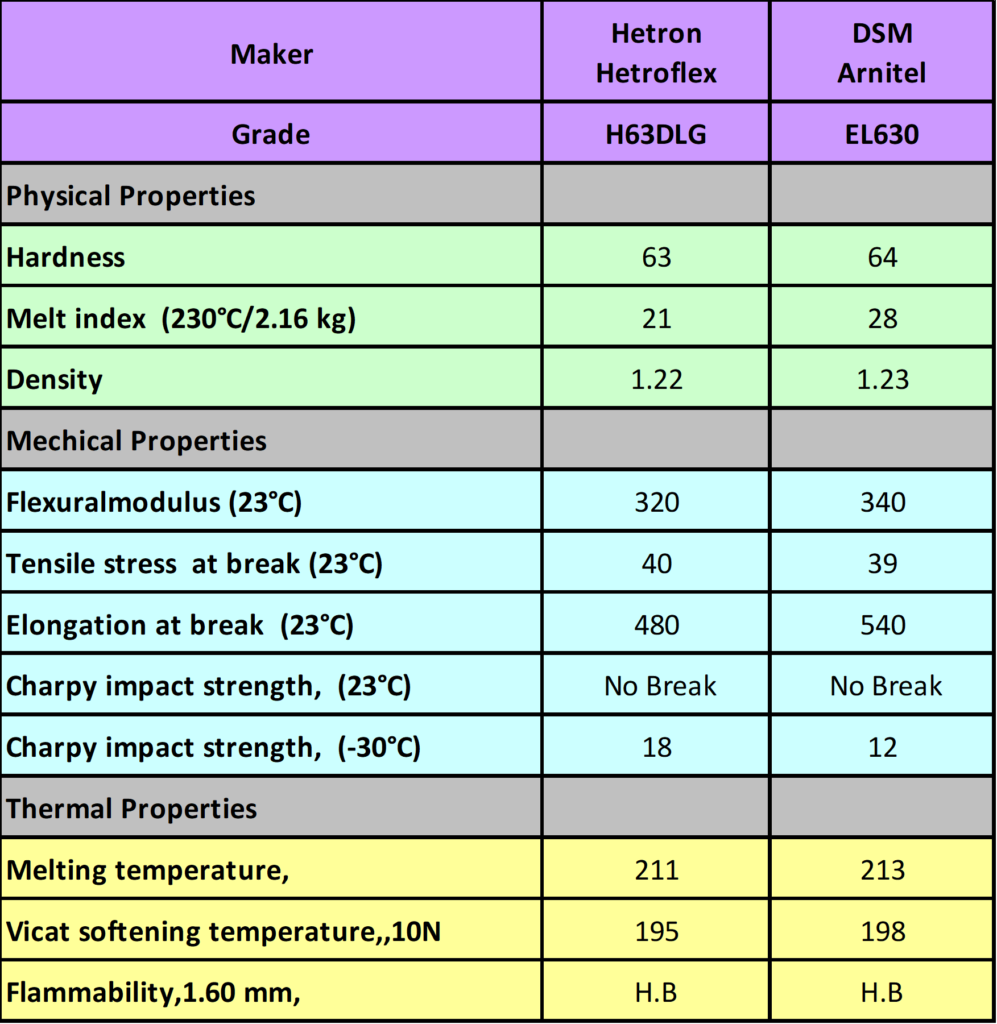
How TPEE Material Enhances CVJ Boot Performance
1. Extended Service Life
Field data shows that CVJ boots molded from TPEE material often outlast rubber boots by 3–5 times. The material’s resistance to dynamic ozone cracking and flex fatigue ensures integrity over 300,000 km or more.
2. Design Freedom for Complex Geometries
As a thermoplastic, TPEE can be injection molded into convoluted shapes with tight tolerances. Engineers can incorporate integrated ribs, sensor mounts, or multi-lip sealing features without secondary operations.
3. Lightweighting
Compared to CR or PU, TPEE offers a density of ~1.2 g/cm³ while maintaining equivalent or higher mechanical strength. This contributes to unsprung mass reduction—a key factor for EV range optimization.
4. Wide Service Temperature Window
Whether in Arctic cold or desert heat, TPEE retains flexibility. Unlike rubber, which stiffens below -20°C, TPEE remains pliable, preventing cold-start grease leakage.
Selecting the Right TPEE Supplier for Automotive Applications
Not all TPEE suppliers offer the same quality. For CVJ boots, you need grades with controlled crystallization behavior and consistent melt flow for thin-wall molding. A reliable TPEE supplier should provide:
- Full material data sheets (MDS) per ISO 16365
- Long-term aging data in automotive lubricants (e.g., 120°C×3000h)
- Lot-to-lot traceability and IATF 16949 certification
Among the trusted names in this space, Hetroflex TPEE delivers specifically engineered grades for CVJ boots, balancing flexibility at low temperatures with structural integrity under extreme torque.
Manufacturing Considerations: Molding TPEE CVJ Boots
TPEE material is processed via conventional injection molding. Recommended melt temperature: 210–230°C. Mold temperature: 30–50°C. Drying is essential—typically 3 hours at 100°C. Compared to thermoset rubber, TPEE offers cycle time reductions of 40–60% and zero flash waste, making it cost-competitive at scale.
Sustainability and End-of-Life
Unlike rubber, thermoplastic polyester elastomer is recyclable. Regrind from runners and rejected boots can be recompounded (up to 20–30%) without significant property loss, supporting automakers’ circular economy targets.
FAQ
Q1: What is the typical lifespan of a TPEE CVJ boot?
A: Under normal driving conditions, TPEE CVJ boots can exceed 300,000 km or 10 years, far outlasting rubber boots (typically 80,000–120,000 km).
Q2: Can TPEE replace rubber in existing CVJ boot molds?
A: Mold design may require adjustments for shrinkage (1.0–1.2%) and venting. However, with minor modifications, TPEE works well in most rubber molds.
Q3: How do TPEE properties compare to TPU (thermoplastic polyurethane) for boots?
A: TPEE has superior heat ageing (150°C vs. 110°C for TPU) and better hydrolysis resistance. TPU is stronger in abrasion but weaker in long-term flex fatigue.
Q4: Is TPEE material compatible with lithium-based greases?
A: Yes. TPEE shows excellent resistance to mineral oil-based and synthetic lithium greases commonly used in CV joints. Compatibility testing per OEM standards is recommended.
Q5: What should I look for in a TPEE supplier for automotive approval?
A: Look for ISO/TS 16949 certification, complete IMDS data, production part approval process (PPAP) support, and a proven track record with tier-1 axle manufacturers.
Q6: Can TPEE boots be used in electric vehicles (EVs)?
A: Absolutely. EV drivetrains impose higher torque ripple and lower noise tolerance. TPEE’s damping properties and high-temperature stability make it an excellent choice.
Q7: Is Hetroflex TPEE suitable for low-temperature below -40°C?
A: Special low-temperature grades of Hetroflex TPEE maintain flexibility down to -50°C, meeting severe cold-climate OEM requirements.
Q8: Does TPEE boot material affect NVH (Noise, Vibration, Harshness)?
A: TPEE has inherent damping characteristics similar to rubber, and with proper convolute design, it contributes positively to NVH performance.
Conclusion
For engineers and procurement managers seeking to eliminate premature CVJ boot failures, TPEE material offers proven advantages in durability, temperature range, and total cost of ownership. By partnering with a qualified TPEE supplier like Hetroflex TPEE, automotive manufacturers can deliver longer-lasting driveline systems with confidence.
