

TPEE vs TPU: What Is the Difference?
19 February 2026
Best Material for Automotive Air Duct Systems: The Engineering Shift to TPEE
8 March 2026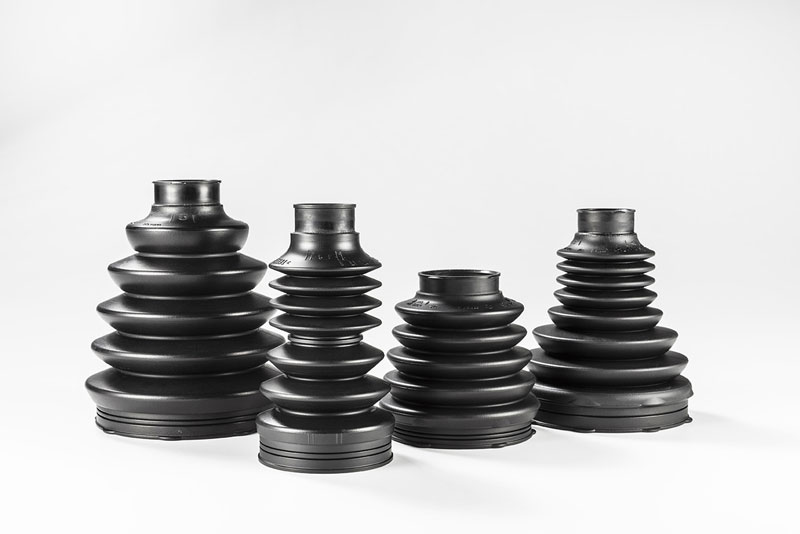
In modern automotive manufacturing, selecting the right material for critical drivetrain components directly impacts durability, safety, and long-term performance. One such key component is the CVJ boot (Constant Velocity Joint boot), which protects the CV joint from contamination, grease leakage, and mechanical damage.
Among various elastomer options, TPEE material (Thermoplastic Polyester Elastomer) has emerged as a superior solution for automotive CVJ boots. For OEM manufacturers, purchasing engineers, and custom automotive component suppliers worldwide, Hetroflex® TPEE provides a high-performance, reliable, and globally competitive material option.
This article explains why TPEE material is ideal for automotive CVJ boots and how it supports long-term automotive performance.
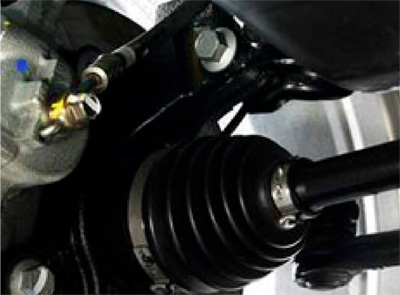
1. Understanding the Performance Requirements of CVJ Boots
CVJ boots operate in extremely demanding environments. They must:
- Withstand continuous flexing and torsional stress
- Resist grease, oil, salt, water, and road debris
- Tolerate extreme temperatures (-40°C to 150°C or higher)
- Maintain elasticity over long service life
- Prevent cracking and fatigue failure
Traditional materials such as CR (chloroprene rubber) and TPU have been widely used, but automotive evolution—especially in EV platforms—demands materials with improved thermal stability, lighter weight, and better processing efficiency.
This is where TPEE material stands out.
2. Superior Mechanical Strength and Fatigue Resistance
CVJ boots undergo millions of flex cycles during vehicle operation. TPEE material offers:
- Excellent dynamic fatigue resistance
- High tensile strength
- Superior tear resistance
- Outstanding rebound elasticity
Compared to conventional rubber, TPEE provides longer service life under repeated bending and vibration. For high-performance vehicles and heavy-duty platforms, this durability significantly reduces warranty risks and maintenance costs.
Hetroflex® TPEE is engineered specifically for demanding mechanical applications, ensuring consistent molecular structure and mechanical reliability.
3. Exceptional Temperature Resistance
Automotive CVJ boots are exposed to:
- High underbody temperatures
- Winter sub-zero conditions
- Heat generated from braking and drivetrain systems
TPEE material maintains flexibility across a wide temperature range, typically from -40°C up to 150°C (or higher depending on grade). Unlike some elastomers that become brittle in cold environments or soften excessively in heat, TPEE maintains dimensional stability and mechanical integrity.
For global automotive manufacturers operating across North America, Europe, and Asia, this thermal reliability is essential.
4. Outstanding Chemical and Oil Resistance
CVJ boots must prevent grease leakage while resisting:
- Transmission fluids
- Road salt
- Engine oil
- Ozone exposure
- Hydrocarbon contaminants
TPEE material offers excellent resistance to oils and automotive chemicals, maintaining sealing performance over extended periods. This ensures drivetrain protection and reduces premature joint failure.
Hetroflex® TPEE formulations are optimized for automotive fluid compatibility, making them highly suitable for OEM production lines.
5. Lightweight Advantage for Modern Vehicles
Vehicle lightweighting is a key trend in both internal combustion and electric vehicles. Compared to traditional rubber compounds, TPEE material:
- Has lower density
- Enables thinner wall designs
- Supports part weight reduction
Even small weight reductions across millions of vehicles create significant fuel efficiency and energy savings. For EV manufacturers, lightweight CVJ components contribute directly to improved range performance.
6. Excellent Processability and Manufacturing Efficiency
For manufacturing factories and procurement engineers, processing efficiency is as important as material performance.
TPEE material offers:
- Thermoplastic processability (injection molding, extrusion, blow molding)
- Shorter cycle times
- Recyclability of production scrap
- Consistent dimensional control
Unlike thermoset rubber, TPEE does not require vulcanization. This reduces production complexity, improves automation compatibility, and lowers overall manufacturing costs.
For global suppliers seeking cost-effective, high-volume production, Hetroflex® TPEE delivers both technical and economic advantages.
7. Long-Term Durability and Reduced Total Cost of Ownership
When evaluating materials for automotive CVJ boots, OEMs focus not only on material price but also on:
- Field failure rates
- Warranty risks
- Maintenance frequency
- Lifecycle durability
TPEE material’s combination of flexibility, strength, and environmental resistance ensures long-term operational stability. This translates into lower total cost of ownership (TCO) for automotive brands.
8. Why Choose Hetroflex® TPEE for Automotive Applications?
As a global supplier of high-performance TPEE material, Hetroflex offers:
- Automotive-grade TPEE compounds
- Customizable hardness and performance grades
- Stable global supply capacity
- Technical support for OEM development
- Material testing and validation assistance
Hetroflex® TPEE is designed to meet the stringent requirements of automotive manufacturers and Tier 1 suppliers worldwide. Whether for high-speed passenger vehicles or heavy-duty applications, the material can be tailored to meet specific performance targets.
9. TPEE vs. Traditional Materials for CVJ Boots
| Property | TPEE Material | Rubber (CR) | TPU |
|---|---|---|---|
| Fatigue Resistance | Excellent | Good | Good |
| Oil Resistance | Excellent | Moderate | Good |
| Temperature Range | Wide | Moderate | Moderate |
| Recyclability | Yes | No | Yes |
| Processing Efficiency | High | Lower | Moderate |
| Weight | Lightweight | Heavier | Moderate |
For modern automotive design, TPEE material delivers a balanced combination of mechanical strength, thermal stability, and processing flexibility that traditional materials struggle to match.
Conclusion: The Future of Automotive CVJ Boots Lies in TPEE Material
As automotive systems become more demanding, material selection must evolve accordingly. TPEE material offers the ideal balance of durability, flexibility, temperature resistance, and manufacturing efficiency required for high-performance CVJ boots.
For manufacturers, procurement engineers, and custom automotive component suppliers seeking a reliable global partner, Hetroflex® TPEE provides advanced material solutions tailored to modern automotive requirements.
If you are developing next-generation CVJ boots or optimizing existing production lines, TPEE material may be the competitive advantage your product needs.
