
How to Improve TPEE Part Durability: A Guide for Industrial Manufacturers
7 June 2026
Can TPEE Be Recycled? Everything Manufacturers Should Know About TPEE Material
11 July 2026In today’s fast-paced manufacturing landscape, automotive, consumer electronics, and industrial design engineers are constantly searching for materials that push the boundaries of performance. For decades, vulcanized rubber and traditional elastomers have been the go-to choices for flexibility and sealing. However, as modern applications demand extreme temperature resistance, high load-bearing capacity, and chemical durability, rubber is increasingly hitting its limits.
If you are looking for the best alternative to rubber materials, the answer lies in an advanced engineering polymer: TPEE material (Thermoplastic Polyester Elastomer).
Below, we’ll explore why migrating from traditional rubber to Hetroflex® TPEE is not just an alternative, but a major technological upgrade for your production line.
What is TPEE Material and Why is it Replacing Rubber?
Thermoplastic Polyester Elastomer (TPEE) bridges the gap between conventional rubbers and rigid plastics. It consists of a crystalline hard segment (polyester) that provides structural strength and fluid resistance, combined with an amorphous soft segment that provides rubber-like flexibility.
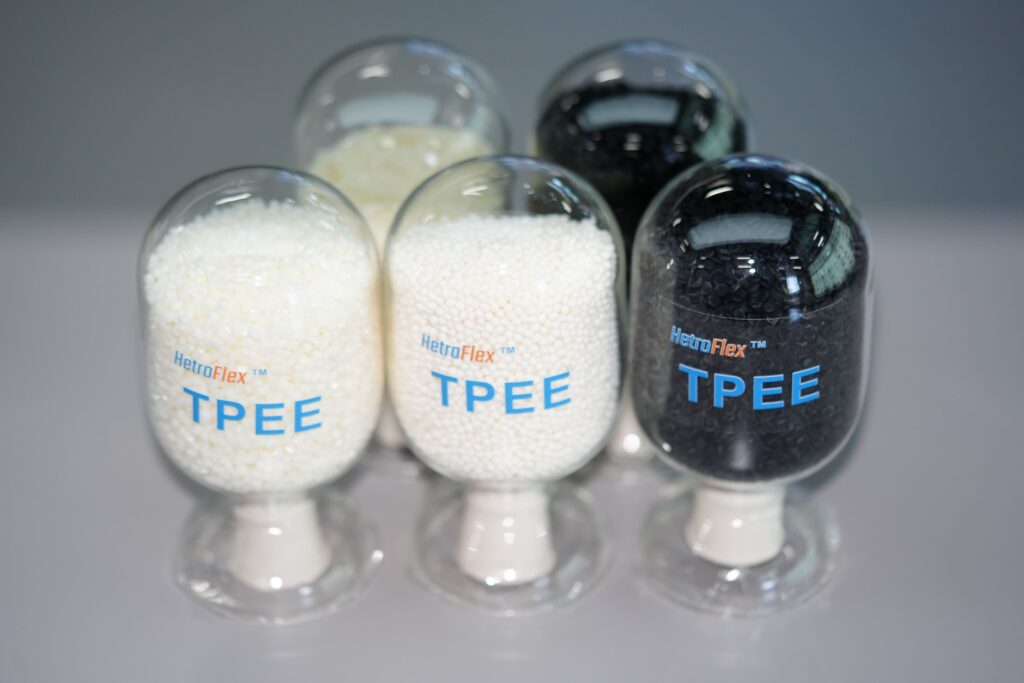
Unlike vulcanized rubber, which requires a time-consuming and irreversible curing process, TPEE is a thermoplastic. This means it can be injection molded, extruded, and blow-molded with unmatched efficiency and 100% recyclability.
Hetroflex® TPEE vs. Traditional Rubber: A High-Performance Comparison
For procurement professionals and manufacturing plants, material selection boils down to measurable performance and cost-efficiency. Here is how Hetroflex® TPEE outperforms standard rubber in critical industrial environments:
1. Superior Fatigue and Flex Resistance
Traditional rubber degrades and cracks over millions of flex cycles due to ozone exposure and mechanical stress. Hetroflex® TPEE exhibits exceptional flex fatigue resistance, making it ideal for dynamic applications like automotive CVJ (Constant Velocity Joint) boots, bellows, and protective sheathing.
2. Outstanding Temperature Performance
Rubber can brittle in extreme cold and soften or deform under intense heat. Hetroflex® TPEE maintains its high elasticity and structural integrity across a sweeping temperature range, from sub-zero arctic conditions up to high-temperature engine bays.
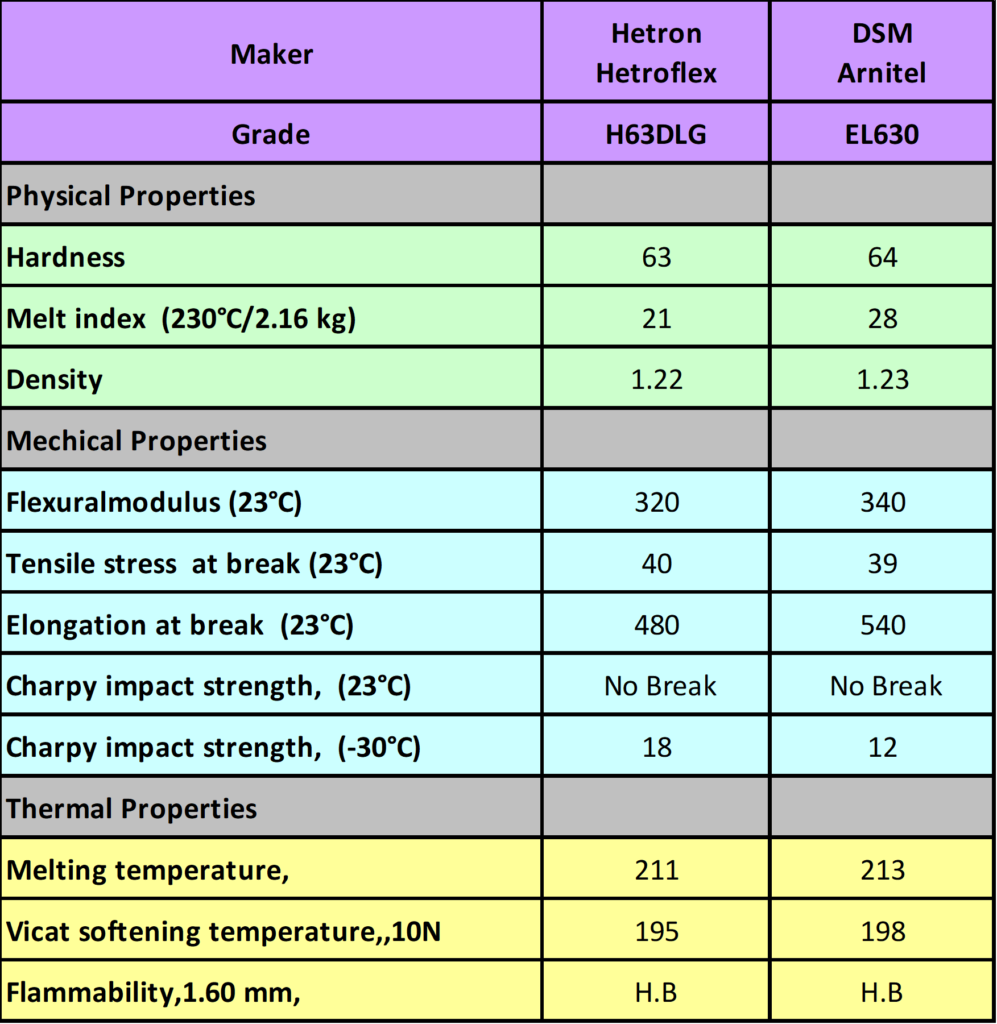
3. Chemical and Oil Resistance
Where rubbers swell and lose tensile strength when exposed to oils, greases, and automotive fluids, TPEE stands resilient. It offers premier resistance to hydrocarbons, industrial solvents, and chemical degradation.
| Performance Metric | Traditional Rubber | Hetroflex® TPEE Material |
| Processing Speed | Slow (Requires Vulcanization) | Fast (Injection/Extrusion/Blow Molding) |
| Recyclability | Difficult / Non-recyclable | 100% Recyclable Scrap |
| Flex Fatigue Life | Moderate to Low | Exceptionally High |
| Oil & Chemical Resistance | Low to Moderate (Varies by compound) | High |
Key Global Applications for Hetroflex® TPEE
As a premier TPEE supplier serving global manufacturing hubs, Hetroflex delivers specialized material grades tailored for various high-spec industries:
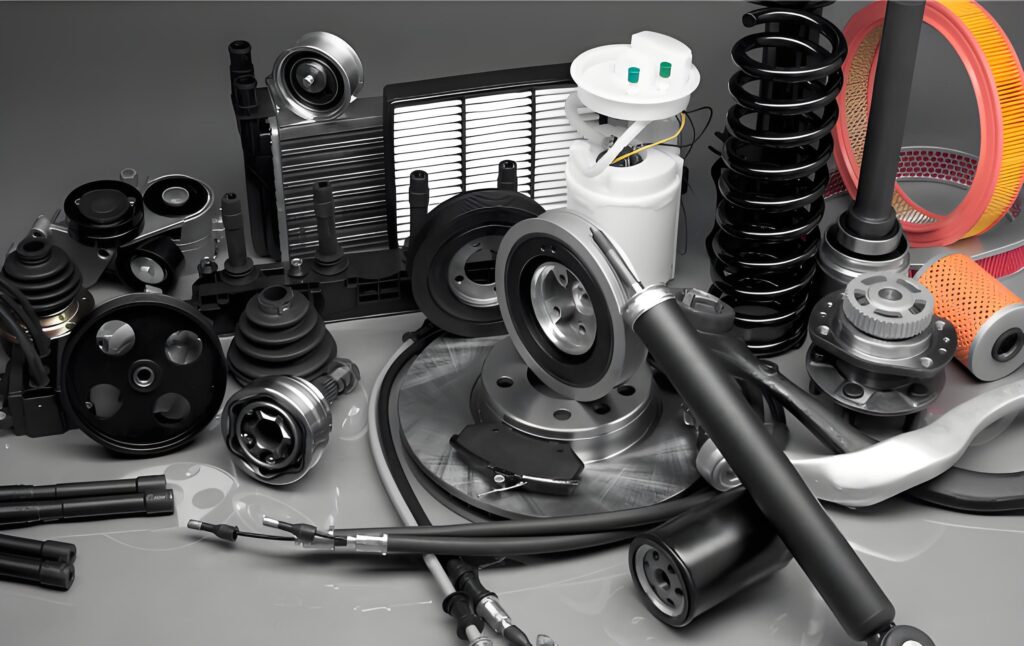
- Automotive Systems: Air duct systems, dust covers, CVJ boots, and silent gears where weight reduction and high durability are mandatory.
- Industrial Engineering: High-pressure hydraulic hoses, conveyor belts, couplings, and damping pads.
- Consumer Goods & Electronics: Resilient protective cases, wearable strap components, and sports equipment parts that require a premium tactile feel combined with rugged toughness.
The Economic Advantage: Lower Total Cost of Ownership (TCO)
While the raw material cost per kilogram of high-quality TPEE might seem higher than raw low-grade rubber on paper, the Total Cost of Ownership (TCO) is significantly lower for manufacturing plants:
- Faster Cycle Times: Eliminating the vulcanization step reduces molding cycle times from minutes to seconds.
- Zero Waste: Flash and scrap generated during production can be reground and reused immediately, slashing material waste to near zero.
- Thinner Wall Designs: Because TPEE has a much higher tensile strength than rubber, engineers can design parts with thinner walls, reducing overall part weight and material volume.
Partner with Hetroflex®: Your Trusted Global TPEE Supplier
Transitioning to a new material requires more than just buying pellets; it demands technical expertise, consistent quality assurance, and reliable global logistics.
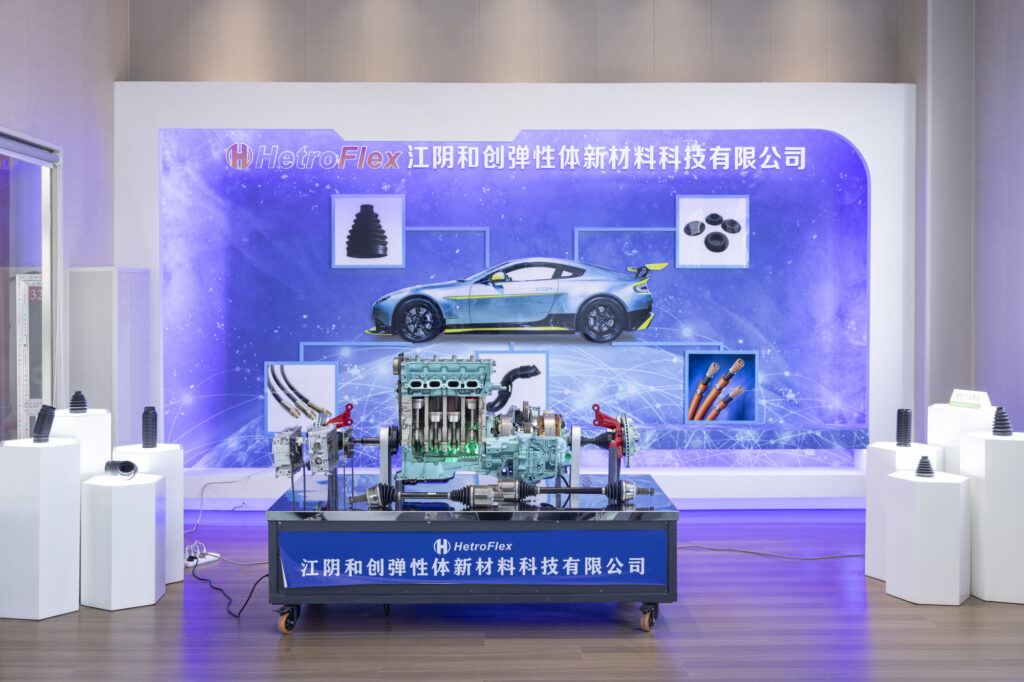
As a leading global TPEE supplier, Hetroflex TPEE provides a comprehensive portfolio of grades ranging from soft, high-flexibility elastomers to high-hardness structural resins. Whether you are an OEM engineer looking to redesign a failing component, or a raw material distributor expanding your high-end polymer catalog, Hetroflex delivers customized compounding solutions to meet your precise technical specifications.
Ready to Upgrade Your Material Strategy?
Stop letting the limitations of traditional rubber slow down your product innovation. [Contact the Hetroflex technical team today] to request material data sheets, schedule a technical consultation, or secure a sample batch for your next trial run.
