
TPEE Material for Industrial Seals: Why Manufacturers Choose Hetroflex TPEE
10 May 2026
Best Materials for Cable Sheathing: Why TPEE Material Is Becoming the Preferred Choice
23 May 2026The global automotive industry is rapidly evolving toward lightweight design, improved durability, sustainability, and higher manufacturing efficiency. As vehicle manufacturers and automotive component suppliers search for advanced alternatives to traditional materials, TPEE material (Thermoplastic Polyester Elastomer) has emerged as a high-performance replacement for conventional rubber in many automotive applications.
From air duct systems and CVJ boots to seals, cable sheathing, and vibration-damping components, TPEE material is helping manufacturers achieve better performance while reducing production complexity and long-term maintenance costs.
As a professional thermoplastic elastomer manufacturer, Hetroflex TPEE provides advanced TPEE solutions tailored for demanding automotive applications worldwide.
What Is TPEE Material?
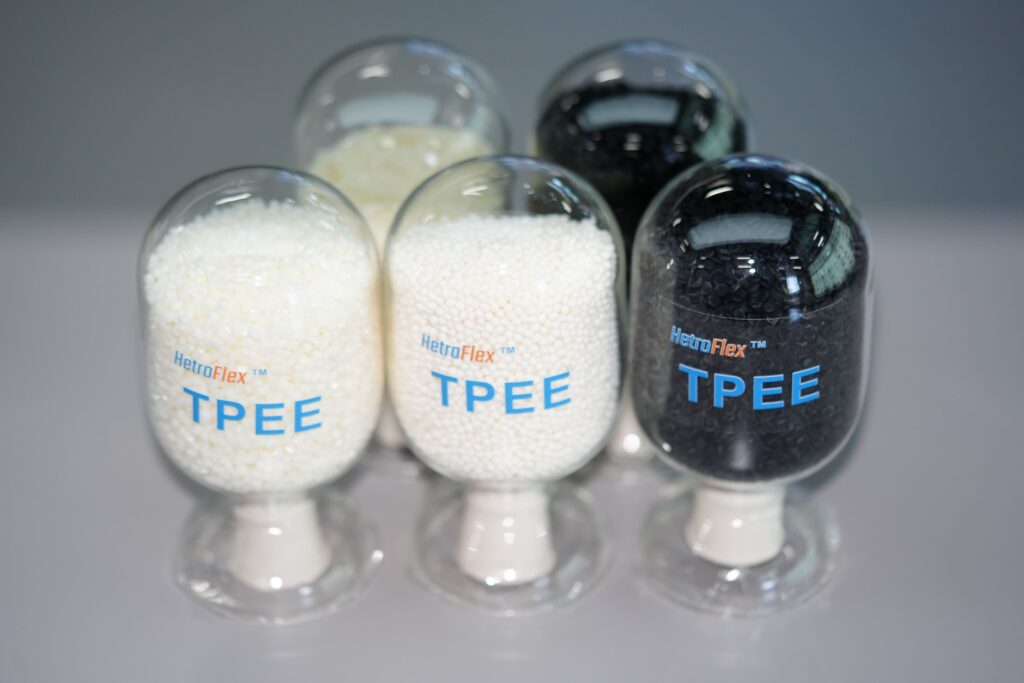
TPEE material, also known as Thermoplastic Polyester Elastomer, is a high-performance engineering elastomer that combines the elasticity of rubber with the processing advantages of thermoplastics.
It features:
- Excellent flexibility
- High mechanical strength
- Superior fatigue resistance
- Outstanding chemical resistance
- Wide operating temperature range
- Easy thermoplastic processing
Compared with traditional vulcanized rubber, TPEE offers manufacturers faster production cycles, recyclability, and improved dimensional stability.
Why Replace Rubber with TPEE in Automotive Parts?
Traditional rubber materials have been widely used in automobiles for decades. However, modern automotive engineering requires materials that can meet stricter performance, environmental, and manufacturing standards.
TPEE material addresses many limitations associated with rubber.
1. Lightweight Performance for Modern Vehicles
Vehicle lightweighting is one of the biggest trends in the automotive industry, especially for electric vehicles (EVs).
TPEE material provides:
- Lower component weight
- High strength-to-weight ratio
- Improved fuel efficiency
- Better EV energy efficiency
Replacing heavy rubber components with lightweight TPEE can contribute to overall vehicle weight reduction without sacrificing durability.
2. Superior Heat Resistance
Automotive environments often involve extreme temperatures.
TPEE material maintains excellent mechanical performance under both high and low temperatures, making it suitable for:
- Engine compartment components
- Turbocharger air ducts
- Wire harness protection
- Under-the-hood applications
Unlike some rubber compounds that harden or crack over time, TPEE maintains flexibility and resilience across a broad temperature range.
3. Excellent Chemical and Oil Resistance
Automotive parts are constantly exposed to:
- Lubricants
- Fuels
- Hydraulic fluids
- Grease
- Road chemicals
TPEE material demonstrates strong resistance to automotive fluids and chemicals, helping extend component lifespan and reduce maintenance requirements.
This makes TPEE particularly valuable for demanding applications such as fuel system components and fluid-transfer tubing.
4. Outstanding Fatigue and Flex Resistance
Dynamic automotive components require materials capable of enduring repeated stress and movement.
TPEE material offers:
- Exceptional flex fatigue resistance
- High impact resistance
- Long-term elasticity retention
- Excellent vibration damping
Applications benefiting from these properties include:
- CVJ boots
- Bellows
- Suspension components
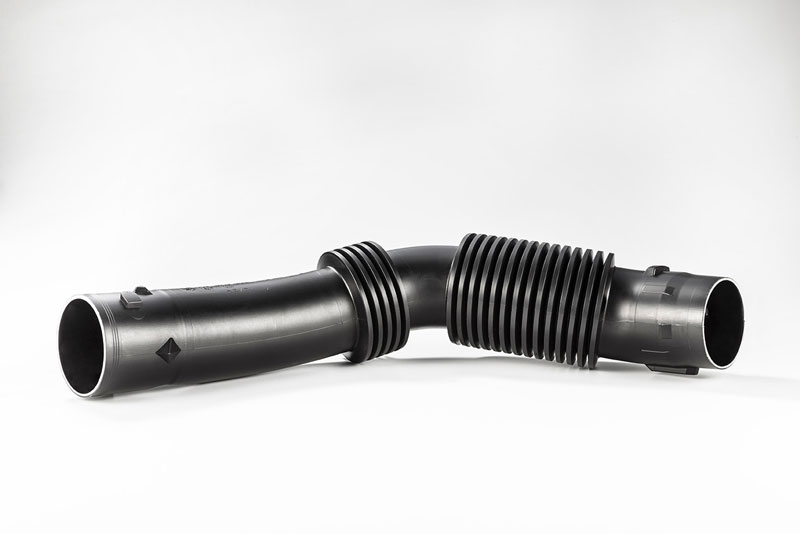
- Flexible ducts
- Cable jackets
5. Faster and More Efficient Manufacturing
Unlike traditional rubber, which requires vulcanization, TPEE material can be processed using standard thermoplastic manufacturing methods.
This allows:
- Faster production cycles
- Injection molding compatibility
- Extrusion processing
- Reduced energy consumption
- Easier recycling of production scrap
For automotive manufacturers and OEM suppliers, this translates into lower operational costs and higher production efficiency.
Common Automotive Applications of TPEE Material
Today, TPEE material is widely used in various automotive systems due to its balanced mechanical and chemical properties.
Air Intake and Turbocharger Ducts
TPEE performs exceptionally well in high-temperature airflow systems because of its flexibility and thermal stability.
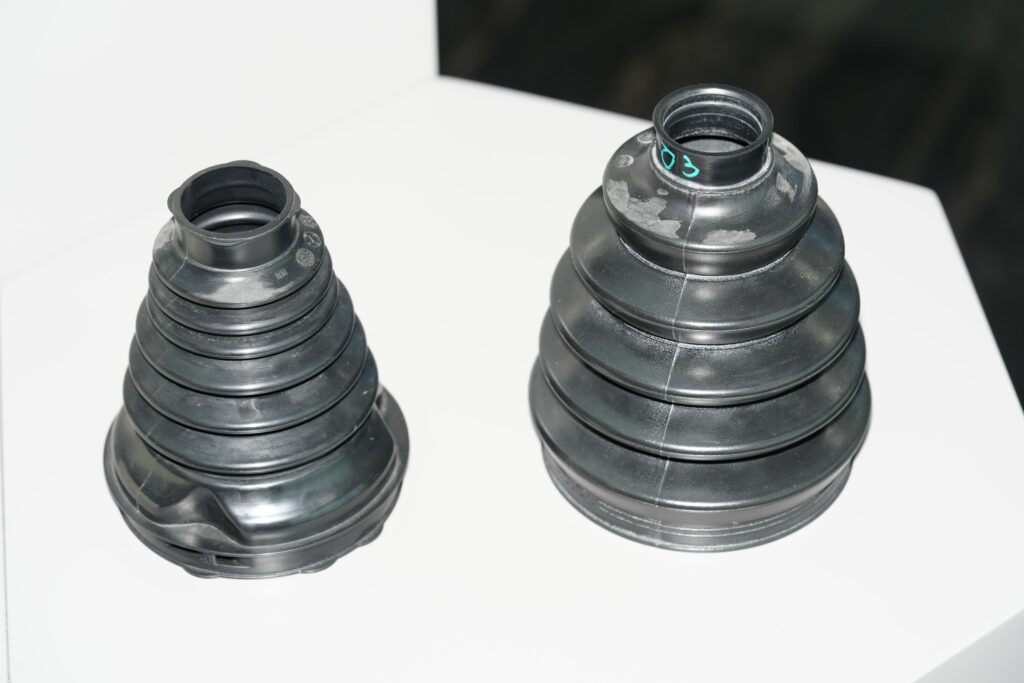
CVJ Boots
The material’s fatigue resistance and durability make it ideal for constant velocity joint boots subjected to continuous movement and harsh road conditions.
Automotive Seals and Gaskets
TPEE can replace rubber in sealing systems requiring:
- Oil resistance
- Long-term flexibility
- Compression recovery
- Weather resistance
Wire and Cable Protection
TPEE material offers excellent abrasion resistance and flexibility for automotive cable sheathing and protective tubing.
EV Battery Components
As electric vehicles continue growing globally, TPEE is increasingly used in:
- Battery sealing systems
- Charging cable protection
- Thermal management components
- Flexible connectors
TPEE vs Rubber: Key Differences
| Property | TPEE Material | Traditional Rubber |
|---|---|---|
| Processing Efficiency | High | Lower |
| Recyclability | Excellent | Limited |
| Heat Resistance | Excellent | Good |
| Chemical Resistance | Excellent | Moderate |
| Flex Fatigue Resistance | Outstanding | Good |
| Lightweight Potential | High | Moderate |
| Production Cycle | Shorter | Longer |
| Dimensional Stability | Excellent | Moderate |
For many automotive applications, TPEE material delivers a better balance between performance, processing efficiency, and sustainability.
Why Automotive Manufacturers Choose Hetroflex TPEE
As automotive supply chains become increasingly quality-focused and innovation-driven, material selection plays a critical role in product reliability and production efficiency.
Hetroflex TPEE specializes in advanced TPEE material solutions designed for industrial and automotive applications.
Key advantages include:
- Customized TPEE formulations
- Stable global supply capability
- Technical engineering support
- Consistent material quality
- Support for extrusion and injection molding applications
- Solutions tailored for automotive OEM requirements
Whether you are an automotive parts manufacturer, raw material distributor, or procurement engineer, Hetroflex TPEE can help optimize your product performance and manufacturing efficiency.
Future Trends: TPEE in Electric and Smart Vehicles
The rapid growth of electric vehicles and intelligent automotive systems is accelerating the demand for advanced elastomer materials.
TPEE material is expected to play an increasingly important role in:
- Lightweight EV structures
- High-performance cable systems
- Thermal management solutions
- Sustainable automotive manufacturing
- High-durability flexible components
As automotive manufacturers seek more recyclable and high-performance alternatives to traditional rubber, TPEE continues gaining global market adoption.
Conclusion
Replacing rubber with TPEE in auto parts is no longer just a material trend — it is becoming a strategic manufacturing upgrade for the modern automotive industry.
With its combination of flexibility, durability, chemical resistance, lightweight properties, and efficient processing, TPEE material offers clear advantages over traditional rubber in many automotive applications.
For manufacturers aiming to improve product performance, reduce production costs, and meet future automotive standards, Hetroflex TPEE provides reliable and customizable TPEE material solutions for the global automotive market.
