
How to Process TPEE in Injection Molding | Complete Guide by Hetroflex TPEE
6 April 2026
Why TPEE Is Used in High-End Cables | TPEE Material Guide
17 April 2026What is TPEE Material?
TPEE material (Thermoplastic Polyester Elastomer) is a high-performance engineering elastomer that integrates the flexibility of rubber with the strength and processability of thermoplastics.
Its molecular structure consists of:
- Hard segments (polyester) – providing strength and heat resistance
- Soft segments (polyether) – delivering elasticity and flexibility
Unlike traditional rubber, TPEE can be processed through injection molding, extrusion, and blow molding, making it highly efficient for modern manufacturing and suitable for recycling.
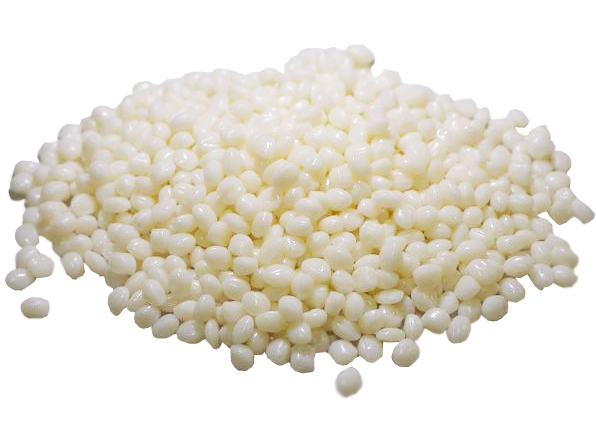
Key TPEE Properties
Understanding TPEE properties is critical for engineers and B2B buyers selecting materials for demanding environments.
Mechanical Performance
- High tensile strength and impact resistance
- Excellent fatigue and flex resistance
- Long service life under dynamic stress
Thermal Resistance
- Operating temperature range: -40°C to 150°C
- Maintains flexibility at low temperatures
- Strong resistance to thermal aging
Chemical & Environmental Resistance
- Resistant to oils, fuels, and solvents
- Excellent UV and weather resistance
- Low moisture absorption
Processing Advantages
- Suitable for injection molding and extrusion
- Recyclable and reprocessable
- Stable dimensions and consistent quality
These features make thermoplastic polyester elastomer a top choice for high-performance industrial applications.
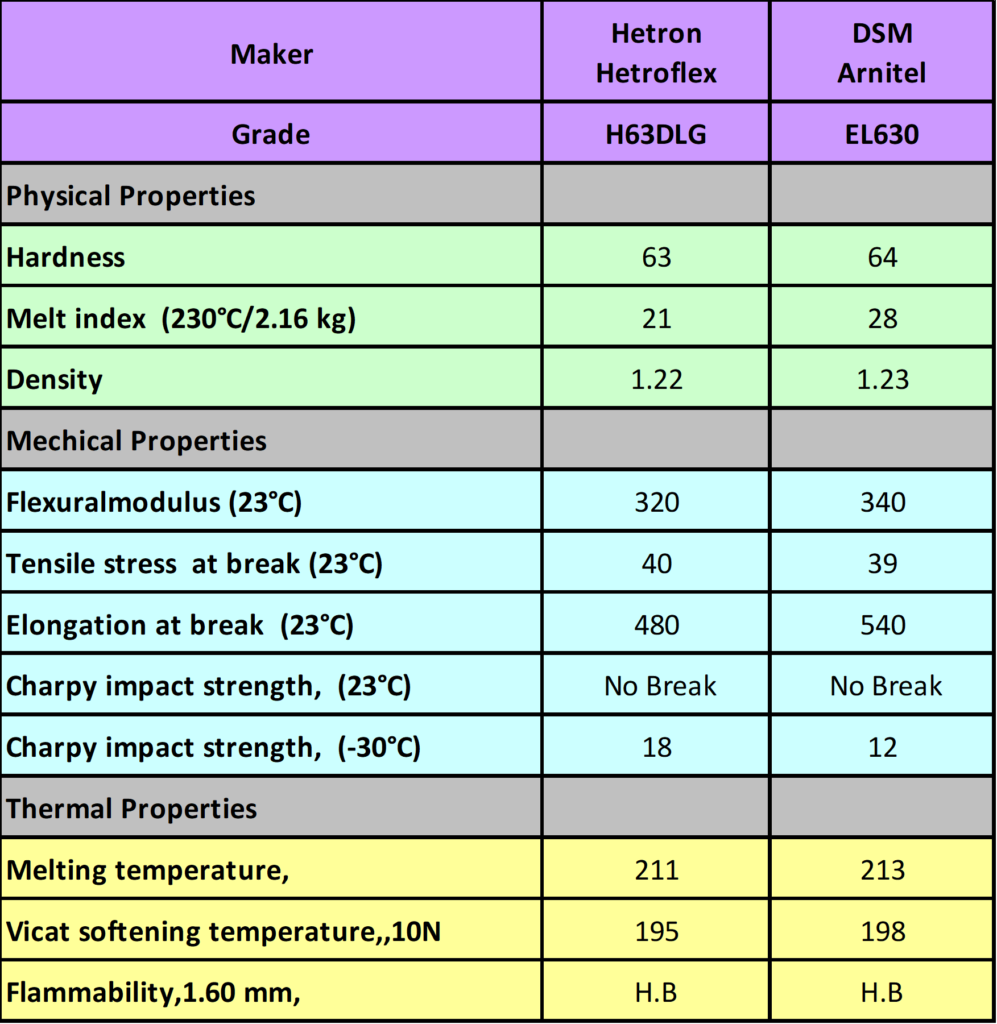
Applications of TPEE Material
Automotive Industry
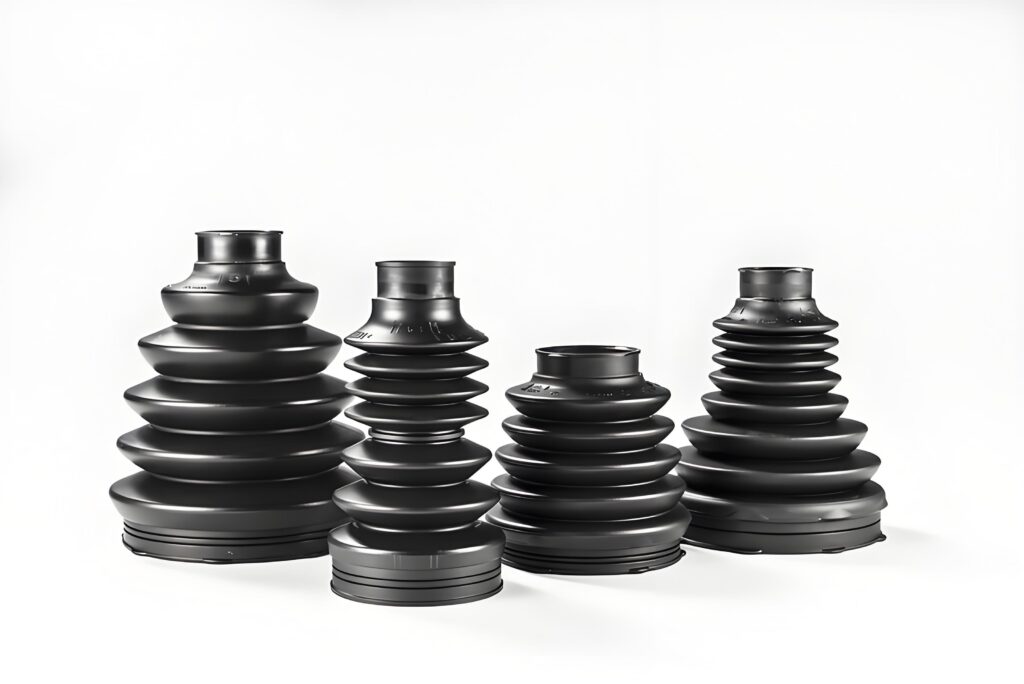
TPEE material is widely used in automotive systems due to its durability and resistance to harsh environments.
Typical applications:
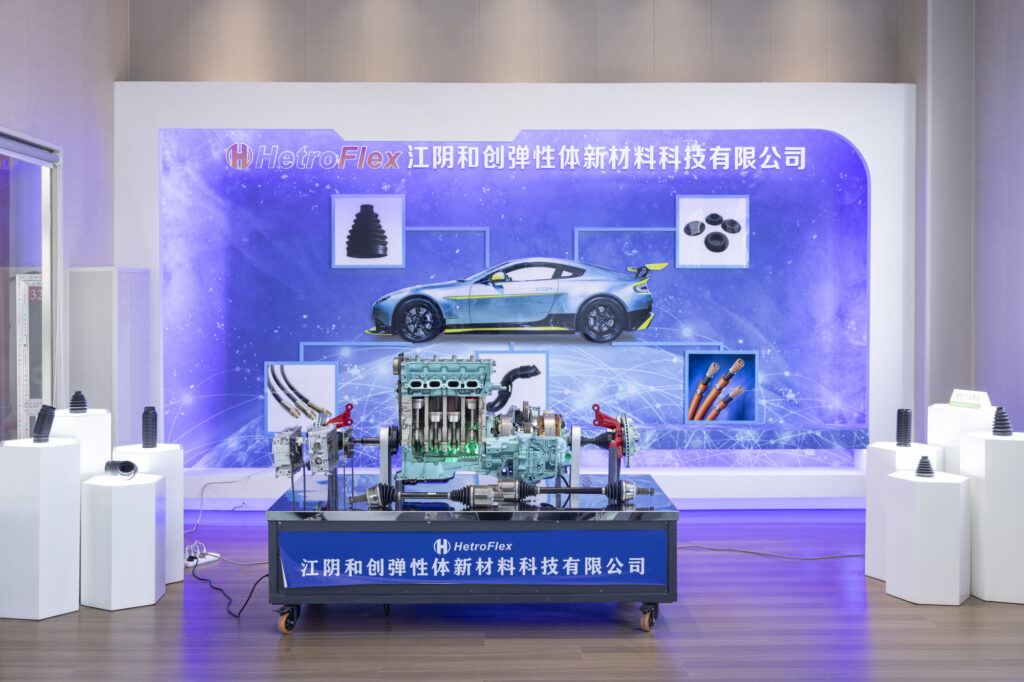
- CVJ boots and bellows
- Air ducts and turbo hoses
- Seals and gaskets
Its resistance to oil, heat, and mechanical stress makes it an excellent alternative to rubber.
Wire & Cable Industry
In cable applications, TPEE provides both flexibility and protection.
Applications include:
- Fiber optic cable jackets
- Industrial cable sheathing
- Charging cable insulation
Its abrasion resistance and flexibility ensure long-term reliability in dynamic environments.
Footwear Industry
TPEE is increasingly popular in performance footwear.
Applications:
- Sports shoe midsoles
- High-rebound outsoles
Compared to traditional materials, TPEE offers better energy return and durability, making it ideal for premium athletic products.
Electrical & Electronics
TPEE is used in electronic components that require both insulation and durability.
Applications:
- Connectors and plugs
- Flexible housings
- Cable components
Its dimensional stability and heat resistance ensure precision and safety.
TPEE vs TPU vs TPE: Key Differences
Choosing the right elastomer depends on performance requirements.
| Property | TPEE Material | TPU | TPE |
|---|---|---|---|
| Strength | High | Medium–High | Medium |
| Elasticity | Excellent | Excellent | Good |
| Temperature Range | Wide (-40°C to 150°C) | Moderate | Limited |
| Chemical Resistance | Excellent | Good | Moderate |
| Cost | Higher | Medium | Lower |
Selection Guide
- TPEE material → Best for high-performance, long-life applications
- TPU → Ideal for abrasion resistance and transparency
- TPE → Suitable for cost-sensitive applications
Why Choose Hetroflex TPEE?
As a professional TPEE supplier, Hetroflex TPEE provides reliable, high-quality materials for global industries.
Key Advantages
- Stable and consistent product quality
- Wide range of customizable grades
- Technical support for application development
- Strong global supply capability
Whether for automotive, cable, or industrial applications, Hetroflex ensures performance and reliability.
How to Choose the Right TPEE Grade
Selecting the correct TPEE material requires evaluating several factors:
Application Requirements
- Static or dynamic use?
- Exposure to chemicals, UV, or heat?
Mechanical Needs
- Required hardness (Shore D)
- Strength and flexibility
Processing Method
- Injection molding or extrusion
- Production efficiency requirements
Compliance Standards
- Automotive certifications
- Environmental standards (RoHS, REACH)
Working with an experienced TPEE supplier helps ensure optimal material selection.
Recommended Internal Links
To improve SEO and user experience, link to:
- TPEE product category page
- Automotive-grade TPEE solutions
- Cable and wire TPEE applications
- Related blogs (e.g., TPEE vs TPU, TPEE recyclability)
FAQ: TPEE Material
What is TPEE material used for?
TPEE is used in automotive parts, cables, footwear, and electronics due to its durability and flexibility.
Is TPEE better than TPU?
TPEE offers better heat and chemical resistance, while TPU performs better in abrasion resistance and transparency.
Is TPEE recyclable?
Yes, TPEE is a recyclable thermoplastic, making it more sustainable than traditional rubber.
What are the main TPEE properties?
High strength, excellent elasticity, wide temperature resistance, and strong chemical durability.
How to find a reliable TPEE supplier?
Choose suppliers with stable quality, customization capabilities, and strong technical support like Hetroflex.
Get a Quote for TPEE Material
Looking for a reliable TPEE material solution for your project?
Hetroflex TPEE offers customized grades tailored to automotive, cable, footwear, and industrial applications.
👉 Contact us today to request samples, technical datasheets, or a customized quotation.
