


TPEE Automotive Applications: Why Global Manufacturers Choose TPEE Materials
14 March 2026
Is TPEE Recyclable? A Complete Guide to TPEE Material Sustainability
21 March 2026In modern industrial manufacturing, materials must withstand demanding environmental conditions, especially high temperatures, mechanical stress, and long-term thermal aging. Among many engineering elastomers, TPEE material (Thermoplastic Polyester Elastomer) stands out for its exceptional temperature resistance, flexibility, and durability.
For engineers, manufacturers, and material distributors, understanding the thermal performance of TPEE material is essential when selecting materials for automotive, electronics, and industrial components.
In this article, we explain how TPEE performs under different temperatures, its operating limits, and why Hetroflex TPEE is trusted worldwide for high-performance applications.
What Is TPEE Material?
TPEE (Thermoplastic Polyester Elastomer) is a block copolymer composed of hard polyester segments and soft polyether segments. This unique structure gives TPEE a combination of properties typically found in both rubber and engineering plastics.
Key characteristics include:
- Excellent heat resistance
- Outstanding fatigue resistance
- Superior flexibility at low temperatures
- High mechanical strength
- Strong chemical resistance
Because of these properties, TPEE material is widely used in automotive parts, industrial equipment, electrical components, and consumer products.
Temperature Resistance of TPEE Material
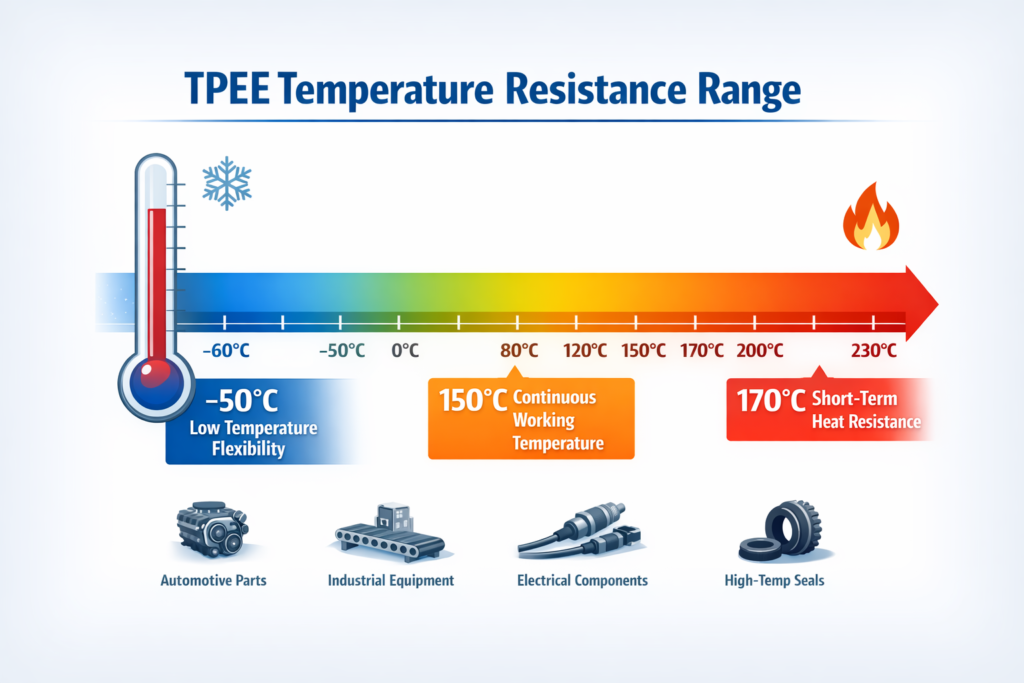
One of the most important advantages of TPEE material is its ability to maintain mechanical performance across a wide temperature range.
Typical Temperature Range of TPEE
| Property | Temperature Range |
|---|---|
| Continuous operating temperature | -40°C to 150°C |
| Short-term heat resistance | Up to 170°C |
| Glass transition temperature | Around -50°C |
| Melting temperature | 200°C – 230°C |
This broad temperature range allows TPEE to perform reliably in both extreme cold and high-heat environments.
For example:
- Automotive engine compartments
- Industrial conveyor components
- Electrical insulation systems
- Flexible tubing exposed to heat
High-quality materials such as Hetroflex TPEE are engineered to maintain stability and elasticity even under long-term thermal stress.
Why TPEE Performs Well Under High Temperatures
The excellent thermal stability of TPEE material comes from its molecular structure.
1. Crystalline Polyester Hard Segments
The polyester segments form crystalline domains, which act as physical cross-links. These domains provide:
- High heat resistance
- Structural stability
- Mechanical strength
2. Elastic Polyether Soft Segments
The soft segments provide flexibility and resilience, allowing the material to maintain elasticity even when temperatures fluctuate.
This dual-phase structure enables TPEE to outperform many conventional elastomers.
TPEE vs Other Elastomers in Heat Resistance
When engineers select materials for high-temperature applications, they often compare TPEE with other thermoplastic elastomers.
| Material | Continuous Temperature | Key Limitation |
|---|---|---|
| TPEE | Up to 150°C | Higher cost than standard TPE |
| TPU | 80–120°C | Hydrolysis sensitivity |
| TPE | 70–100°C | Lower mechanical strength |
| Rubber | 120°C | Difficult recycling |
Compared with alternatives, TPEE material offers a superior balance of heat resistance, durability, and processability, making it an ideal choice for demanding industrial environments.
Industrial Applications Requiring High Temperature Resistance
Because of its excellent thermal stability, TPEE material is widely used in applications where heat and mechanical stress coexist.
Automotive Industry
Common uses include:
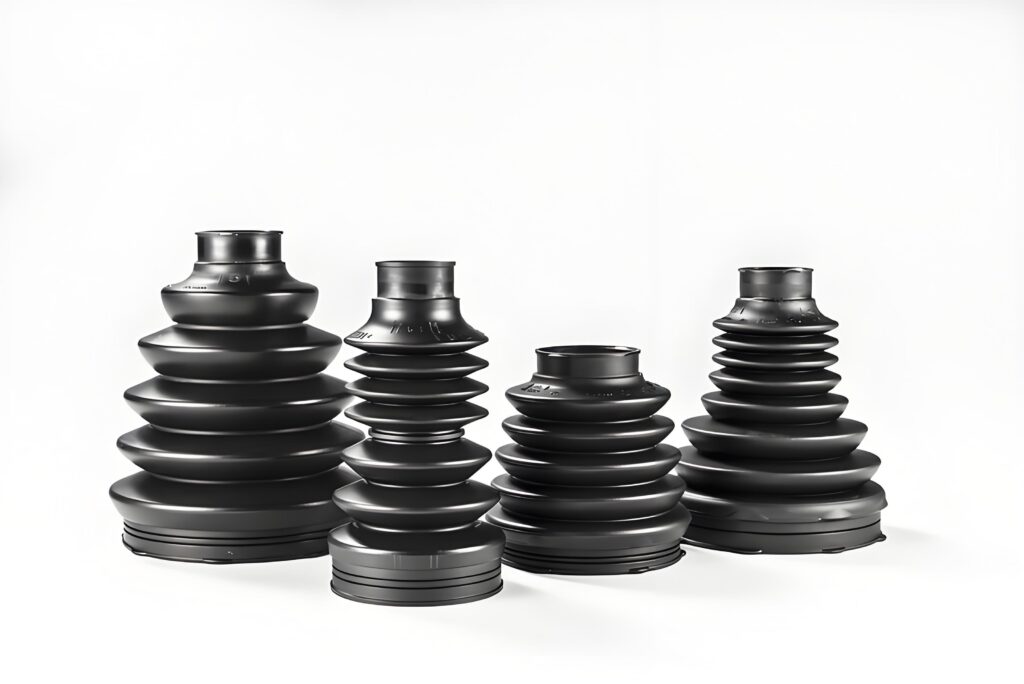
- CVJ boots
- Air ducts
- Wire and cable insulation
- Sensor housings
These parts must tolerate engine heat, vibration, and oil exposure.
Electrical and Electronics
TPEE is widely used for:
- Cable sheathing
- Connectors
- Electrical insulation components
Its heat resistance ensures long-term reliability in electrical systems.
Industrial Machinery
Applications include:
- Conveyor belts
- Flexible couplings
- High-performance seals
These components benefit from the combination of flexibility and thermal durability.
Factors That Affect TPEE Heat Resistance
Although TPEE material inherently has excellent temperature resistance, several factors influence its performance:
Grade Selection
Different grades of TPEE are designed for different temperature ranges.
Processing Conditions
Injection molding or extrusion temperatures can influence final material properties.
Environmental Exposure
Factors such as humidity, chemicals, and mechanical stress can affect long-term thermal stability.
Working with an experienced material manufacturer ensures that the right formulation is used for each application.
Why Choose Hetroflex TPEE?
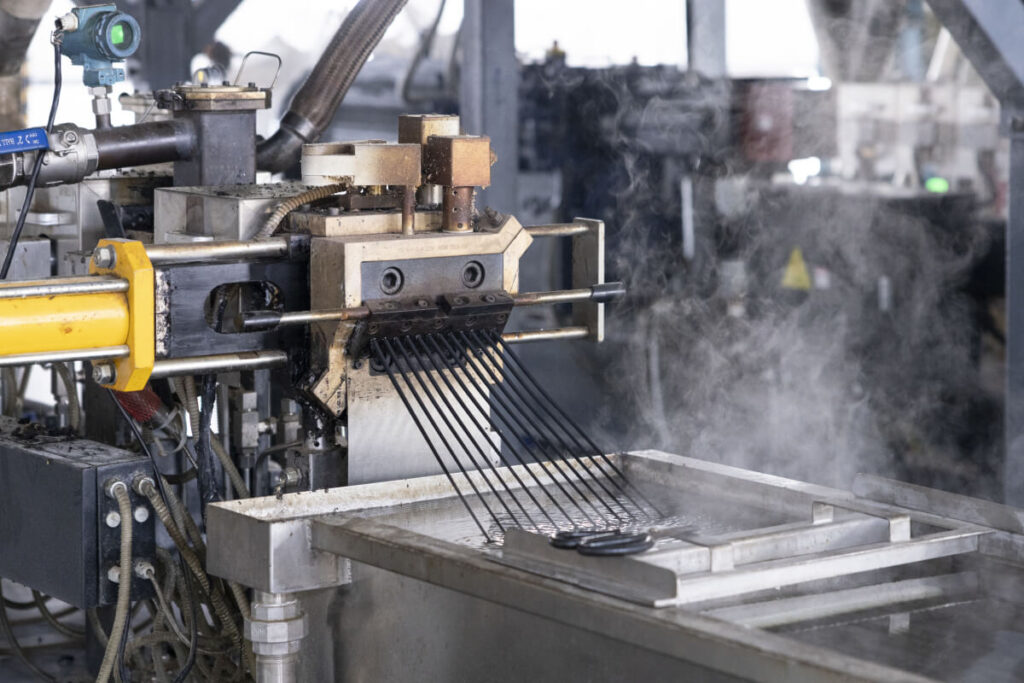
As a professional TPEE material manufacturer, Hetroflex provides high-performance elastomers designed for demanding industrial applications.
Advantages of Hetroflex TPEE include:
- Excellent temperature resistance
- Stable mechanical properties
- Reliable quality consistency
- Customizable material formulations
- Global supply capability
Hetroflex TPEE materials are widely used by manufacturers, engineers, and distributors worldwide in automotive, electronics, and industrial markets.
Conclusion
Understanding the temperature resistance of TPEE material is essential when selecting materials for demanding environments.
With a wide operating temperature range, excellent thermal stability, and superior mechanical performance, TPEE has become one of the most reliable thermoplastic elastomers for industrial applications.
For companies seeking high-quality materials, Hetroflex TPEE offers reliable solutions tailored to modern manufacturing needs worldwide.
