
TPC-ET Material: Properties, Applications & Trusted TPC-ET Manufacturer Hetroflex TPEE
7 October 2026
Unlocking High Performance: Major Application Fields of TPC-ET Material
25 October 2026Constant velocity joints (CV joints) are essential drivetrain components that transfer power from the transmission to the wheels while allowing continuous movement of the suspension and steering system. Protecting these joints is the job of the CVJ boot, which prevents grease leakage and keeps water, dust, dirt, and other contaminants away from the joint.
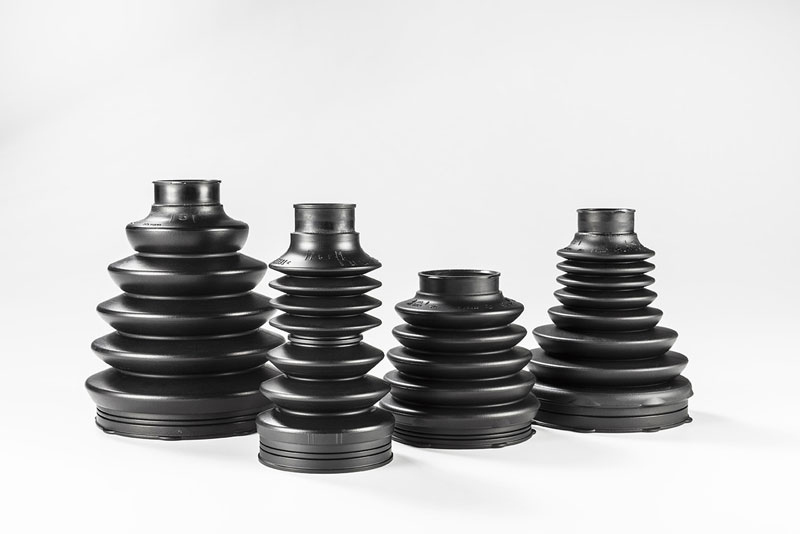
Because CVJ boots operate under continuous flexing, temperature changes, and exposure to automotive grease, material selection is critical. TPC-ET materials, also known as thermoplastic polyester elastomers (TPEE), offer a combination of flexibility, mechanical strength, chemical resistance, and processing efficiency that makes them an attractive material for automotive CVJ boots.
What Are TPC-ET Materials?
TPC-ET is a thermoplastic copolyester elastomer that combines flexible segments with high-strength polyester segments. This structure provides rubber-like elasticity while maintaining the processing advantages of thermoplastic materials.
Depending on the grade, TPEE material can offer:
- Excellent flex fatigue resistance
- Good tear and tensile strength
- High temperature resistance
- Low-temperature flexibility
- Resistance to oils and greases
- Good chemical resistance
- Efficient thermoplastic processing
These properties make TPC-ET materials suitable for a wide range of demanding automotive applications.
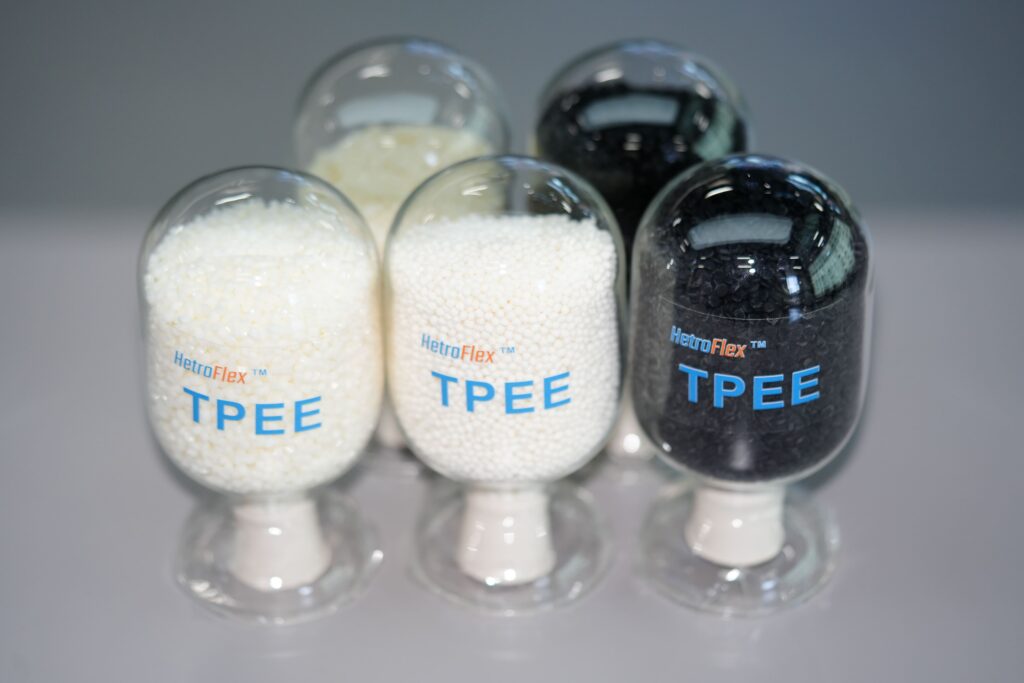
Why Use TPC-ET for CVJ Boots?
1. Excellent Flex Fatigue Resistance
CVJ boots continuously deform as the joint moves during driving. Repeated bending can eventually cause cracks or fatigue failure in unsuitable materials.
High-performance TPEE grades can provide excellent resistance to repeated flexing, helping CVJ boots maintain their structural integrity and sealing performance over extended service periods.
2. Resistance to Grease and Automotive Fluids
CVJ boots are constantly exposed to lubricating grease. A suitable boot material must resist swelling, softening, and deterioration caused by long-term chemical exposure.
TPC-ET materials offer good resistance to many oils and greases, although compatibility should always be verified against the specific grease and operating conditions.
3. Wide Temperature Performance
Automotive components can experience significant temperature variations, from cold winter conditions to elevated temperatures around the drivetrain.
Appropriately formulated TPEE materials can maintain flexibility and mechanical performance across a broad temperature range, making them suitable for demanding underbody applications.
4. Strong Mechanical Durability
A CVJ boot must remain flexible while also resisting tearing, stretching, and mechanical fatigue. TPC-ET materials provide a useful balance between elasticity and strength.
This combination can help manufacturers develop lightweight components without sacrificing the durability required for dynamic automotive applications.
TPC-ET vs. Traditional Rubber
Traditional rubber remains widely used for CVJ boots. However, TPC-ET provides an alternative material platform with the advantages of thermoplastic processing.
Compared with conventional rubber, suitable TPEE grades can offer:
- Thermoplastic injection molding capability
- Consistent processing and dimensional control
- Good dynamic fatigue performance
- Potentially easier handling of production scrap
- Tunable hardness and mechanical properties
The best material choice depends on the boot design, temperature, grease compatibility, fatigue requirements, and OEM specifications.
Choosing the Right TPEE Supplier
For automotive manufacturers, selecting a TPEE supplier involves more than comparing material prices. Consistent quality, technical support, application development, and customization capability are important factors.
Hetroflex TPEE provides thermoplastic polyester elastomer solutions for automotive and industrial applications. Its TPEE materials can be selected according to requirements such as hardness, flexibility, heat resistance, chemical resistance, and mechanical durability.
For manufacturers, purchasing engineers, raw material distributors, and custom component developers, working with an experienced TPEE supplier can help accelerate material selection and application development.
Conclusion
With its combination of flexibility, fatigue resistance, mechanical strength, chemical resistance, and thermoplastic processability, TPC-ET materials are a promising solution for automotive CVJ boots and other dynamic components.
The right TPEE grade should always be selected according to the actual operating environment and validated through application-specific testing.
Hetroflex TPEE supports customers worldwide with TPEE material solutions for automotive and industrial applications. Contact Hetroflex to discuss your CVJ boot material requirements and customized TPEE solutions.
